Culinary Medicine

Where the science of nutrition meets the art of cooking.
Article first published in Vegetarian Living NZ Magazine.
Culinary Medicine is about bringing the kitchen into the heart of health. It’s not just about knowing which foods are good for you, but learning how to prepare, cook and share them, and make healthy eating a joyful part of everyday life. Discover how everyday food choices—made right in your own kitchen—can change your health, mood, and habits for good.[1-3]
In our last article, we explored how small daily habits can protect your heart and overall well-being. In this issue, we go beyond science and get practical with Culinary Medicine, a new way to make healthy eating simple, enjoyable, and lasting.
What is Culinary Medicine?
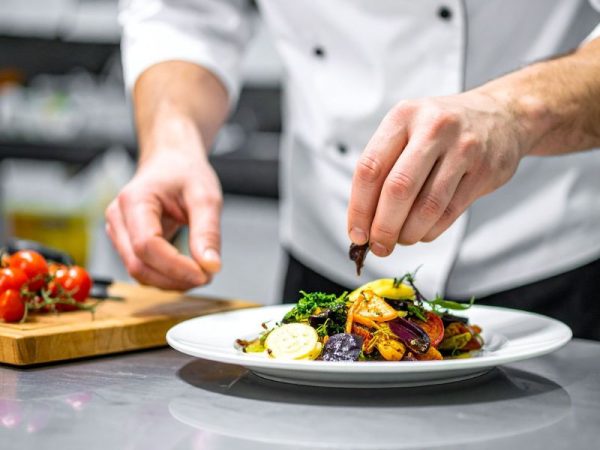
Culinary Medicine blends nutrition science with practical food skills: planning, cooking, and sharing meals in ways that support everyday health.[1-3] It’s not solely reserved for gourmet chefs or health professionals; it’s an approach anyone can use to help prevent and manage disease through simple, meaningful choices in the kitchen.
At its heart, Culinary Medicine is hands-on. Whether taught in community workshops, integrated into medical training, or practised at home, it brings people together to build confidence and knowledge. Empowering people with real-life skills, transforms healthy eating from an abstract idea into something practical, enjoyable, and achievable every day.
Why Culinary Medicine matters
In Australia and New Zealand, cardiovascular disease is the leading cause of death, claiming one life every 12 and 90 and minutes respectively.[4,15] High blood pressure affects one in three adults, with disproportionately higher rates among Indigenous and Pacific peoples, and type 2 diabetes now affects tens of thousands, with cases rising rapidly among both adults and young people. Many chronic conditions—heart disease, diabetes, obesity—are largely preventable, yet the numbers continue to climb.[4,5]
Most people understand that healthy eating and regular movement are important to prevent the onset of chronic disease. Still the pressures of daily life, ingrained habits, and even limited access to nutritious food often make change difficult. The ripple effects manifest in reduced well-being, increased financial strain, and diminished overall quality of life.
Culinary Medicine provides a practical, evidence-based pathway forward. By teaching everyday cooking skills and helping people reconnect with whole, nourishing foods, it empowers individuals to make sustainable, meaningful shifts that support long-term health.
Culinary Medicine is changing the way doctors support patients
Most doctors receive limited education in nutrition or practical food skills.[6] Even when clinicians understand what constitutes healthy eating, many feel unsure about how to guide patients in making realistic changes.
This gap is slowly beginning to close. Culinary Medicine is increasingly integrated into medical education, giving future health professionals greater confidence, empathy, and practical, real-world skills. When doctors understand not only what to eat but also how to make healthy eating achievable in daily life—and can translate that into meaningful guidance—patients are far more likely to experiment with new foods, cook at home, and maintain healthier habits over time.[1,6]
The proven benefits – what research shows
Culinary Medicine interventions have shown tangible improvements in:
- Increased fruit, vegetable, and whole grain intake.[1,2,7]
- Improved cooking confidence and meal planning skills.[1,7]
- Lowered blood pressure, cholesterol, and HbA1c in diabetes.[8,9]
- Enhanced quality of life and mood.[8,9]

The whole food plant-based advantage
Choosing what to eat can be confusing, but evidence continues to highlight the unique health benefits of whole plant foods: vegetables, fruits, legumes, whole grains, nuts, and seeds. These foods are naturally rich in fibre, phytonutrients (including antioxidants), and a diverse range of vitamins and minerals. All of these components have been shown to lower the risk of heart disease, type 2 diabetes, and certain cancers.[8-11]
These beneficial compounds are naturally absent from animal products such as meat and dairy, which contain no dietary fibre and a narrower array of protective nutrients. When we look at the wider body of scientific research, whole plant foods consistently demonstrate positive impacts on health. At the same time, the evidence for animal products ranges from neutral to harmful effects on long-term health.[8,12]
That’s why at Doctors For Nutrition, our approach to Culinary Medicine focuses on maximising whole plant foods and minimising or eliminating animal products and ultra-processed foods, which often lack the components required for optimal health.
What exactly are whole plant foods?
Whole foods look much the same as they did when picked, pulled, or harvested— bananas, kumara, spinach, and brown rice; no ingredient list needed here. In contrast, ultra-processed products bear little resemblance to their origins and often need a back-of-pack explanation.
To keep it simple in the supermarket:
- If you can easily tell where it came from, it’s likely a whole food.
- If something healthy (like fibre or nutrients) has been removed, or something less healthy (like salt, sugar, or preservatives) added, approach with caution.[13]
- Corn on the cob, frozen corn, or canned corn are all close to whole; cornflakes, however, have lost nutrients and gained sugar and salt.[13]
Some processing can improve nutrition, like cooking tomatoes to increase lycopene, making tempeh without losing fibre, or simply freezing berries. The healthiest foods retain the “good stuff” and don’t hide behind lengthy labels.
A few label-reading tips:
- In Australia and New Zealand, ingredients are listed in order, with the most abundant first. If sugar or oil is near the top, or “added vitamins” are listed near the end, pause to consider if a less processed version is available.[14]
Key questions:
- Can I tell where this came from?
- Has anything good been removed?
- Has anything not-so-great been added?
Practical tips for everyday healthy eating
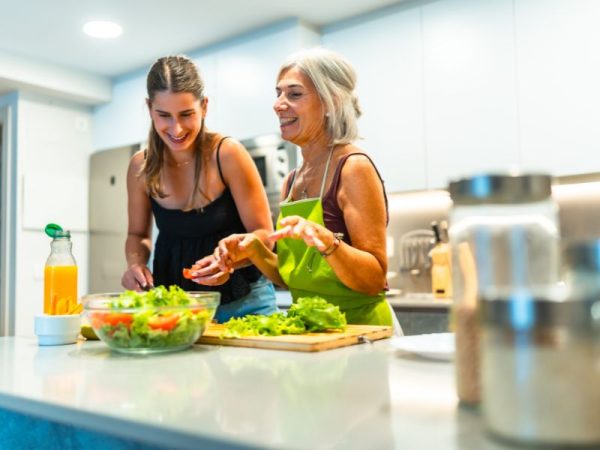
Eating well doesn’t have to be complicated or time-consuming. Small, practical strategies can make healthy meals achievable for everyone, no matter how busy life gets. Batch cooking, prepping ingredients ahead, and relying on simple one-pot meals save time, while affordable staples like canned beans, frozen vegetables, and bulk grains keep costs down. Start with easy recipes and build your skills gradually. Remember, every meal prepared at home is a win. Arranging your kitchen so wholesome foods are visible and accessible, keeping pre-chopped veggies and fruit on hand, and making cooking a shared, social activity all help turn healthy choices into lasting habits.
1. Planning & prepping
- Prep ahead: Chop vegetables or fruit for easy snacking, and use the “chop & stop” method—chop garlic, onions, or broccoli and rest for 10 minutes before cooking to maximise beneficial cancer-reducing compounds.
- Prepare extra veggies: Boost family favourites with more vegetables, legumes, or grains.
- Try new ingredients: Experiment with grains and legumes like quinoa, brown rice, and chickpeas.
- Keep convenience on hand: Use microwavable, tinned, or frozen beans and vegetables for quick nutrition.
- Meal plan: Map out the week ahead to simplify shopping and cooking, reduce stress, and make healthier choices.
2. Cooking
- Start simple: Focus on easy recipes that fit your lifestyle and skill level.
- Modify family favourites: Add more veggies or lentils to a dish you cook regularly.
- Use flavour smartly: Enhance meals with spices, herbs, garlic, and citrus instead of relying on salt, oil, or heavy sauces.
- One-pot meals: Stews, stir-fries, or sheet-pan dishes save time and reduce cleanup.
- Batch cook meals: Make extra servings to freeze or store for quick, healthy options later.
- Mindful experimentation: Make cooking enjoyable by trying new ingredients or plant-based swaps for processed or animal foods.
3. Sharing & social eating
- Cook together: Invite family, friends, or whānau to join in the kitchen—mealtime is more enjoyable when it’s social.
- Community connections: Organise veggie potlucks, recipe swaps, or family cook-offs. Sharing meals strengthens relationships and reinforces healthy habits.
- Respect culture and tradition: Look for ways to add healthy twists to favourite recipes while honouring family and cultural practices.
Take your next step
Culinary Medicine takes the guesswork out of healthy eating, giving anyone the tools to make lasting, positive changes at home. You don’t need to be a chef. Change starts with you, your chopping board, and your kitchen—one simple meal at a time.
Interested in learning more? Sign up for our Culinary Medicine course. The first fully on-demand program of its kind in Australia and New Zealand—created by nutrition experts and medical doctors, made for everyone. Traditionally only taught in medical schools and universities, Culinary Medicine is now accessible to all, with content suitable for health professionals, food industry leaders, and anyone ready to make lasting changes. Immerse yourself in a course that equips you to cook, eat, and live better—no prior experience required.
- Polak, R., Phillips, E. M., & Nordgren, J. (2019). Culinary medicine: Paving the way to health through our forks. American Journal of Lifestyle Medicine, 13(5), 451–460. https://doi.org/10.1177/1559827619871922
- Kumar, N., & Tandon, O. P. (2022). Culinary medicine: A new era of health through the kitchen. J Ghat Health Allied Topics, 8(1), 148–154.
https://www.joghat.org/uploads/2025-vol-8-issue-1-full-text-492.pdf - Storz, M. A., & Hammad, S. (2022). Culinary medicine and healthy ageing: A comprehensive review. Nutrition Research Reviews, 37(1), 179–193. https://doi.org/10.1017/S0954422423000148
- Heart Foundation NZ. (n.d.). Statistics. https://www.heartfoundation.org.nz/statistics
- Jebari‑Benslaiman, S., Galicia‑García, U., Larrea‑Sebal, A., Olaetxea, J. R., Alloza, I., Vandenbroeck, K., Benito‑Vicente, A., & Martín, C. (2022). Pathophysiology of atherosclerosis. International Journal of Molecular Sciences, 23(6), 3346.
https://doi.org/10.3390/ijms23063346 - Aspry, K. E., Van Horn, L., Carson, J. A., Wylie‑Rosett, J., Kushner, R. F., Lichtenstein, A. H., Devries, S., Freeman, A. M., Crawford, A., & Kris‑Etherton, P. (2018). Medical nutrition education, training, and competencies to advance guideline‑based diet counseling by physicians: A science advisory from the American Heart Association. Circulation, 137(23), e821–e841. https://doi.org/10.1161/CIR.0000000000000563
- Satija, A., & Hu, F. B. (2018). Plant‑based diets and cardiovascular health. Trends in Cardiovascular Medicine, 28(7), 437–441. https://doi.org/10.1016/j.tcm.2018.02.004
- Tuso, P. J., Ismail, M. H., Ha, B. P., & Bartolotto, C. (2013). Nutritional update for physicians: Plant‑based diets. The Permanente Journal, 17(2), 61–66. https://doi.org/10.7812/TPP/12‑085
- Medawar, E., Huhn, S., Villringer, A., & Witte, A. V. (2019). The effects of plant‑based diets on the body and the brain: A systematic review. Translational Psychiatry, 9, 226. https://doi.org/10.1038/s41398-019-0552-0
- Van Duyn, M. A. S., & Pivonka, E. (2000). Overview of the health benefits of fruit and vegetable consumption for the dietetics professional: Selected literature. Journal of the American Dietetic Association, 100(12), 1511–1521. https://doi.org/10.1016/S0002-8223(00)00420-X
- Neuenschwander, M., Ballon, A., Weber, K. S., Norat, T., Aune, D., Schwingshackl, L., & Schlesinger, S. (2019). Role of diet in type 2 diabetes incidence: Umbrella review of meta‑analyses of prospective observational studies. The BMJ, 366, l2368. https://doi.org/10.1136/bmj.l2368
- Campbell, T. C., & Campbell, T. M. II. (2017). The China study: The most comprehensive study of nutrition ever conducted and the startling implications for diet, weight loss, and long-term health (Revised & Expanded ed.). BenBella Books
- Monteiro, C. A., Cannon, G., Levy, R. B., Moubarac, J.-C., Louzada, M. L. C., Rauber, F., Khandpur, N., Cediel, G., Neri, D., Martinez‑Steele, E., Baraldi, L. G., & Jaime, P. C. (2019). Ultra‑processed foods: What they are and how to identify them. Public Health Nutrition, 22(5), 936–941. https://doi.org/10.1017/S1368980018003762
- Health New Zealand / Te Whatu Ora. (2025, July 2). How to read food labels. https://info.health.nz/health-topics/keeping-healthy/eating-well/how-to-read-food-labels
- Heart Foundation Australia. (n.d.). Key statistics: Cardiovascular disease. https://www.heartfoundation.org.au/your-heart/evidence-and-statistics/key-stats-cardiovascular-disease