Ageing strong: Maintaining muscle on a plant-based diet
The challenge of sarcopenia
For most people who eat a varied plant-based diet, and meet their calorie needs, protein deficiency simply isn’t a concern. All plants contain all essential amino acids, and when total protein intake is adequate, plant-based eaters build just as much muscle as those eating animal products.
However, as we get older, sarcopenia can develop: the gradual, progressive loss of skeletal muscle mass and strength. It affects an estimated 5-13% of people aged 60-70 and up to 50% of those over 80.[1] The consequences extend well beyond aesthetics, with sarcopenia strongly linked to increased falls, physical disability, frailty, and metabolic conditions like type 2 diabetes.
Two things drive this process. First, we develop greater anabolic resistance—our muscles become progressively less responsive to the signals that trigger growth and repair. Second, and perhaps most significantly, we tend to move less: less exercise means less stimulus for our muscles to maintain themselves.
The good news is that both of these issues are addressable, and a plant-based diet is very well placed to support that.
Resistance training: the most powerful tool
If there’s one intervention that stands above all others for preserving muscle mass and physical function with age, it’s resistance training.[2] Resistance training, also known as strength or weight training, is any exercise in which your muscles contract against an external force. So, for example, this could be done at a gym or at home with free weights, machines, resistance bands, or to some degree with your own body weight.
Resistance training is the primary stimulus for muscle protein synthesis, and it remains effective well into older age. Regular resistance training helps maintain muscle mass, preserve strength, and protect physical function. It also improves balance, bone density, and metabolic health, all of which matter enormously as we age.
For older adults, the aim isn’t necessarily to lift heavy or train like an athlete. Consistent, progressive resistance exercise—bodyweight movements, resistance bands, free weights, or gym machines—done two to four times per week, with a structured program and progression over time, is enough to make a meaningful difference.

Eating enough: energy and protein from whole plant foods
Understanding the relationship between resistance training and nutrition is also important. Food supports the adaptation that training triggers – and nutritional strategies work best when they’re supporting an active body.
Alongside resistance training, eating adequately is the next most important factor. Inadequate calorie intake—which becomes more common with age, as appetite can decrease—accelerates muscle loss regardless of protein quality or quantity. Maintaining energy intake is foundational.
Protein intake matters too. Older adults generally benefit from higher protein intakes than younger adults, with most evidence pointing to a range of 1.2-1.8g of protein per kg of body weight per day as a helpful target for those focused on preserving muscle [2,3]. A 70kg adult will want to consume roughly 85-125g of protein from the food they consume.
Leucine: a more specific consideration for selected older adults
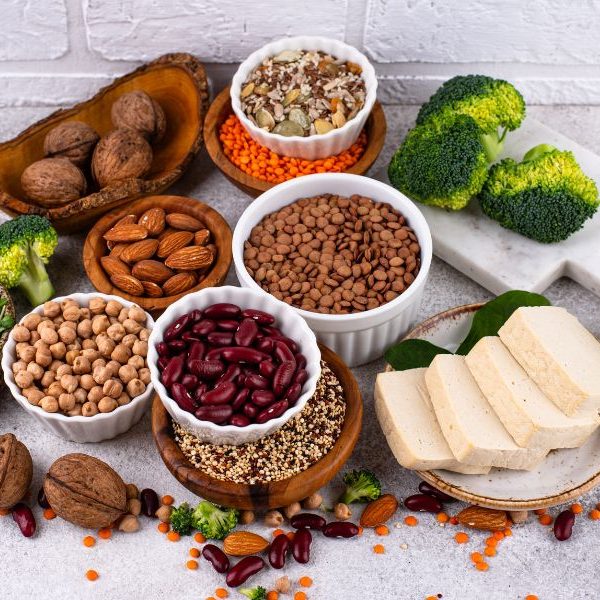
For most older adults who regularly engage in resistance training and eat adequately from a varied whole food plant-based diet, the above is sufficient. But for some—particularly those struggling to maintain muscle mass despite doing the right things—paying closer attention to leucine may be worth exploring.
Leucine is one of nine essential amino acids and plays a particularly important role in triggering muscle protein synthesis. If muscle building were like driving a car, getting enough leucine acts like a key in the ignition.
As anabolic resistance increases with age, the amount of leucine needed to generate a meaningful muscle-building response rises too. This is the context in which leucine becomes a more specific consideration for those for whom other strategies alone haven’t been enough.
What about supplementation?
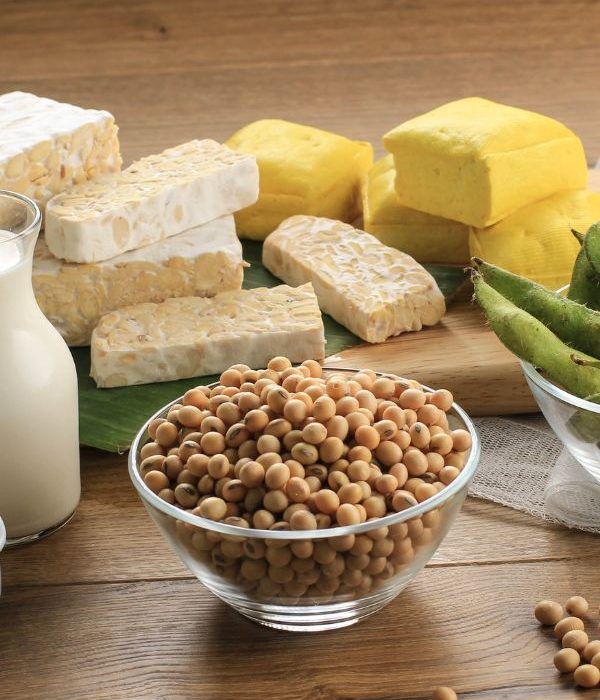
For those who aren’t eating soy regularly, have a soy allergy, or are struggling to eat enough, a leucine powder or a high-leucine plant protein supplement (such as pea and rice protein combined) can be a practical addition to complement whole foods and consistent exercise[4,5], not a replacement for them.
Anyone considering supplementation for sarcopenia management would benefit from discussing it with a dietitian familiar with plant-based nutrition.
Supporting factors worth knowing about
Beyond resistance training and adequate intake, a few other factors are worth keeping in mind.
- Vitamin D plays a role in muscle function, and deficiency is common in older adults—particularly in those with limited sun exposure. Supplementing vitamin D where needed supports both muscle health and bone strength, and appears to work synergistically with good nutrition, combined with leucine supplementation[6,7], and exercise. This is one supplement well worth discussing with your GP or dietitian if you haven’t already.
- Gut health is an emerging area of interest in muscle research. A fibre-rich plant-based diet naturally supports a diverse gut microbiome, and this appears to enhance the body’s ability to utilise the protein you consume[8]. The gut health advantages of a plant-based diet, often discussed in the context of digestion and immunity, are increasingly relevant to muscle health in older adults.
The bottom line
Preserving muscle mass and physical function on a plant-based diet as we age is entirely achievable. The foundations are straightforward: resistance train consistently, eat enough throughout the day, and let a varied, whole food plant-based diet do the nutritional heavy lifting.
For most people, that’s going to be more than enough. For those with greater anabolic resistance or those who need more, paying a little more attention to leucine—primarily through food, and occasionally through supplementation—can be a useful next step.
- von Haehling, S., Morley, J. E., & Anker, S. D. (2010). An overview of sarcopenia: Facts and numbers on prevalence and clinical impact. Journal of Cachexia, Sarcopenia and Muscle, 1(2), 129–133. https://doi.org/10.1007/s13539-010-0014-2
- Huang, C., & Hsieh, M. (2025). Effects of leucine supplementation in older adults with sarcopenia: A meta-analysis. Nutrients, 17(15), 2413. https://doi.org/10.3390/nu17152413
- Lim, M. T., Pan, B. J., Toh, D. W. K., Sutanto, C. N., & Kim, J. E. (2021). Animal protein versus plant protein in supporting lean mass and muscle strength: A systematic review and meta-analysis of randomized controlled trials. Nutrients, 13(2), 661. https://doi.org/10.3390/nu13020661
- Messina, M., Lynch, H., Dickinson, J. M., & Reed, K. E. (2018). No difference between the effects of supplementing with soy protein versus animal protein on gains in muscle mass and strength in response to resistance exercise. International Journal of Sport Nutrition and Exercise Metabolism, 28(6), 674–685. https://doi.org/10.1123/ijsnem.2018-0071
- Lee, S. Y., Park, Y. J., Kim, H. J., Kim, K. T., Choi, H. Y., & Kwon, O. (2022). Effects of leucine-rich protein supplements in older adults with sarcopenia: A systematic review and meta-analysis of randomized controlled trials. Nutrients, 14(13), 2686. https://doi.org/10.3390/nu17152413
- Ju, S., Lee, E. J., Sim, B. C., Nga, H. T., Lee, H. Y., Tian, J., Cho, K. J., Park, H., Choi, D. E., Ham, Y. R., & Yi, H.-S. (2023). Leucine-enriched amino acid supplementation and exercise to prevent sarcopenia in patients on hemodialysis: A single-arm pilot study. Frontiers in Nutrition, 10, Article 1069651. https://doi.org/10.3389/fnut.2023.1069651
- Guo, Y., Fu, X., Hu, Q., Chen, L., & Zuo, H. (2022). The effect of leucine supplementation on sarcopenia-related measures in older adults: A systematic review and meta-analysis of 17 randomized controlled trials. Frontiers in Nutrition, 9, Article 929891. https://doi.org/10.3389/fnut.2022.929891
- Walrand, S., & Le Bacquer, O. (2026). Dietary leucine intake and sarcopenia: From isolated supplementation to combined strategies. Current Opinion in Clinical Nutrition and Metabolic Care, 29(1), 75–80. https://doi.org/10.1097/MCO.0000000000001180