Preventing Bowel Cancer

Reduce your risk through everyday nutrition and lifestyle choices.
Article first published in Vegetarian Living NZ Magazine.
Bowel cancer is a major health challenge in both Australia and New Zealand. In Australia, it is the fourth most commonly diagnosed cancer, with around 14,900 people diagnosed each year. Approximately 1 in 16 Australians will develop bowel cancer during their lifetime, with men experiencing a higher risk than women.[1]
New Zealand has one of the highest rates of bowel cancer in the world. It is the country’s third most commonly diagnosed cancer, with more than 3,000 people diagnosed each year. Around 1 in 18 New Zealanders will develop bowel cancer during their lifetime.[2]
Despite improvements in detection and treatment, bowel cancer remains one of the most serious cancers in both countries. It is the second leading cause of cancer death after lung cancer, claiming the lives of more than 5,300 Australians and 1,200 New Zealanders each year. Particularly concerning is the impact on younger people: bowel cancer is the leading cause of cancer death among Australians aged 25–54 and New Zealanders under 50.[1,2]

The burden is not shared equally across all communities. In Australia, Aboriginal and Torres Strait Islander peoples experience higher rates of bowel cancer mortality than non-Indigenous Australians. In New Zealand, Māori experience higher rates of both bowel cancer incidence and mortality than non-Māori. These disparities reflect broader inequities in health and healthcare, including differences in access to screening and treatment, as well as the social and economic conditions that influence health across the life course.[3,4]
Most of us think bowel cancer is something that happens because of bad luck, family history or getting older. While these factors can play a role, they don’t tell the whole story. In fact, although bowel cancer remains one of the most common and serious cancers in Australia and New Zealand, it’s also one of the most preventable.
Prevention and early detection save lives
Research consistently shows that everyday choices—what we eat, how active we are, whether we smoke, how much alcohol we drink, and other lifestyle habits—play a major role in determining our risk of developing bowel cancer. In fact, the World Cancer Research Fund estimates that more than half of all bowel cancer cases could be prevented through healthy nutrition and lifestyle choices.[5]
While no one can eliminate their risk completely, bowel cancer is highly treatable when found early. Around 90% of people survive when bowel cancer is detected in its earliest stages.[5] Although treatment has improved considerably, it often involves surgery, chemotherapy or radiotherapy and can leave lasting changes to bowel function and quality of life, making prevention and early detection so important. From September 2026, New Zealand’s National Bowel Screening Programme will begin lowering the eligible screening age from 58 to 56 years, recognising the value of detecting bowel cancer—and its precursors—earlier. Together with healthy lifestyle choices, screening offers one of our greatest opportunities to reduce the burden of bowel cancer.
Not just an older person’s disease
For many years, bowel cancer was considered a disease of older age. While risk still increases as we get older, that picture is changing. Around the world, rates of bowel cancer in younger adults have risen by approximately 266% since the 1980s, and today, around 1 in every 10 bowel cancers occurs in people under the age of 50.[6] This trend is especially worrying because bowel cancer develops slowly over many years, with the earliest changes often beginning long before symptoms appear, meaning the disease may start developing in someone’s thirties—or even earlier.
People born during the 1990s are now estimated to be up to three times more likely to develop bowel cancer than those born during the 1950s.[7] And as bowel cancer is still widely seen as an older person’s disease, younger adults are often less likely to recognise the symptoms or seek medical advice promptly, meaning many cases are diagnosed only after the cancer has already progressed.
Lifestyle matters more than you think
A common misconception is that bowel cancer mainly runs in families. In reality, only around 10% of bowel cancers are caused by inherited genetic conditions.[8] The remaining 90% develop over time, influenced by a combination of normal genetic variation and environmental exposures, including the foods we eat and the lifestyle habits we practise every day.
Family history is still important and should always be discussed with your healthcare provider. However, for most people, bowel cancer risk is shaped far more by long-term lifestyle patterns than by inherited genes alone.
This is empowering because it means prevention is relevant for everyone.
One of the strongest messages from research is that healthy lifestyle habits matter—not only for preventing bowel cancer but also after a diagnosis. In one study of nearly 1,000 people with stage III bowel cancer, those who most closely followed healthy lifestyle recommendations, including regular physical activity, eating a predominantly plant-rich diet, limiting alcohol and reducing red and processed meat, had a 42% lower risk of dying during the study period than those with the least healthy lifestyles. After five years, 85% of people with high adherence to healthy habits were still alive, compared with 76% of those with lower adherence.[9]
Simple habits to reduce bowel cancer risk
Eat more protective foods
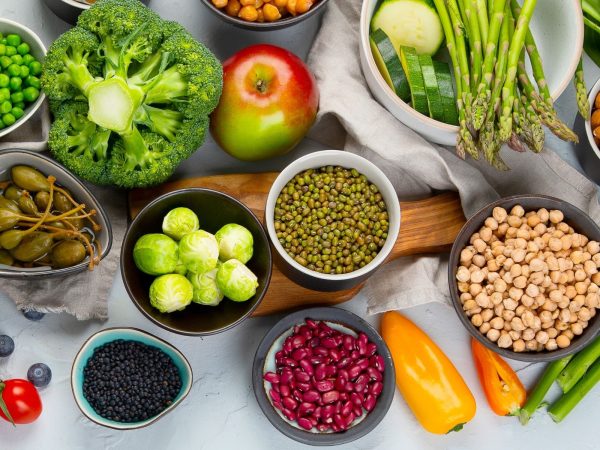
One of the most effective ways to reduce bowel cancer risk is to eat more whole plant foods. Whole grains, legumes, vegetables, fruit, nuts and seeds are rich in dietary fibre, which feeds the beneficial bacteria in your large bowel. In turn, these bacteria produce compounds that help keep the bowel lining healthy, reduce inflammation and create an environment that’s less favourable for cancer to develop. Fibre also helps food move through the digestive system more efficiently, reducing the time potential carcinogens remain in contact with the bowel lining.
Research consistently shows that higher fibre intakes are associated with a lower risk of bowel cancer, with every additional 10 grams of fibre per day linked to around a 13% reduction in risk. Beyond fibre, whole plant foods provide a wide range of vitamins, minerals and protective plant compounds that work together to support bowel health. Eating more vegetables, fruit, legumes, and whole soy foods has been associated with a lower risk of bowel cancer.[10]
Avoid foods that increase risk
Some foods consistently increase the risk of bowel cancer, with the strongest evidence pointing to red and processed meat. Processed meat is classified as a Group 1 carcinogen by the World Health Organization, while red meat is classified as probably carcinogenic. Risk increases with the amount consumed—for example, eating just 50 grams of processed meat each day is associated with an 18% higher risk of bowel cancer.[11]
Research is also investigating the role of ultra-processed foods, particularly those high in refined ingredients and additives that may disrupt the gut microbiome and promote inflammation. However, not all processed foods are equal, and minimally processed plant foods such as whole-grain breads and fortified plant milks can still be part of a healthy diet.
Although some studies have linked dairy with a lower risk of bowel cancer, this is thought to reflect its calcium content rather than dairy itself.[12] As calcium is readily available from leafy greens, tofu, legumes and fortified plant milks—and high dairy intake has been linked with increased risk of some other cancers—major health organisations recommend meeting calcium needs through an overall healthy dietary pattern rather than consuming dairy specifically to prevent cancer.[13]
Stay physically active
Regular physical activity is one of the most effective ways to reduce bowel cancer risk. While researchers are still uncovering exactly how it protects the bowel, exercise is thought to reduce inflammation, support a healthy immune system, improve bowel function and help food move through the digestive tract more quickly, reducing the time potential carcinogens remain in contact with the bowel lining.[14] Staying active also helps maintain a healthy body weight, which is important because obesity is a well-established risk factor for bowel cancer.[15]
Avoid alcohol
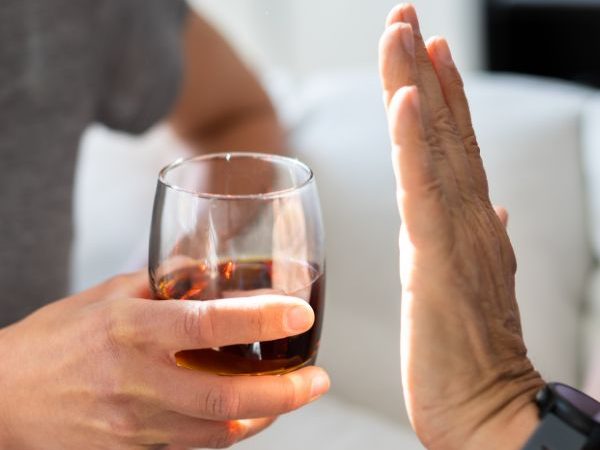
Alcohol is a well-established cause of bowel cancer, with the World Health Organization classifying it as a Group 1 carcinogen implicated in many other cancers too.[116] When alcohol is broken down in the body, it produces acetaldehyde—a toxic compound that can damage DNA, promote inflammation and disrupt the gut microbiome, all of which may contribute to cancer development. Research consistently shows that the more alcohol people drink over time, the greater their risk, and there is no known safe level of alcohol consumption when it comes to cancer prevention.[17]

Avoid smoking
Smoking is a well-established risk factor for bowel cancer, contributing to around 8% of cases. Like alcohol and processed meat, tobacco is classified as a Group 1 carcinogen.[19] Harmful chemicals in tobacco smoke can damage DNA, increase inflammation, impair the immune system and promote the development of bowel polyps, which can become cancerous over time. The longer and more heavily a person smokes, the greater their risk of developing and dying from bowel cancer. Encouragingly, this risk begins to decline after quitting, and stopping smoking at any age provides significant health benefits.[21] While the long-term effects of vaping on bowel cancer risk remain uncertain, current evidence does not support it as a safe alternative to smoking.[20]
Prioritise sleep
Getting enough quality sleep is important for overall health and may also help protect against bowel cancer. Research suggests that people who regularly get adequate sleep and have fewer sleep problems, such as insomnia or excessive daytime sleepiness, have a lower risk of developing bowel cancer.[21] Poor sleep and conditions like obstructive sleep apnoea have been linked to a higher risk, possibly because disrupted sleep affects immune function, increases inflammation and interferes with the body’s natural repair processes.[22] While more research is needed to fully understand these relationships, prioritising good sleep is another healthy habit that supports both bowel health and overall wellbeing. If you have ongoing sleep problems, talk to your GP so they can assess for any underlying medical causes.
Manage stress
While the relationship between stress and bowel cancer is still being studied, chronic stress may contribute to cancer risk by increasing inflammation, disrupting immune function and affecting the body’s ability to repair damaged cells. Stress can also influence behaviours that are known to increase bowel cancer risk, such as poor diet, physical inactivity, inadequate sleep, smoking and higher alcohol consumption.[23] Although the evidence isn’t as strong as it is for factors like diet, physical activity or smoking, managing stress is an important part of supporting overall health and may also play a role in reducing bowel cancer risk.
While no lifestyle approach can completely eliminate the risk of bowel cancer, the evidence is clear that healthy habits can substantially reduce risk, improve overall wellbeing and even change outcomes after diagnosis. By knowing the factors that influence bowel cancer and taking practical steps to protect your health, you will give yourself the best possible chance of living a longer, healthier, cancer-free life.
Take your next step
Ready to take the next step to prevent bowel cancer, either for yourself or your patients?
Sign up for our Preventing Bowel Cancer in Clinical Practice course (and refer your patients to the companion course) to get structured guidance, support, and tools you need.
- Bowel Cancer Australia. Bowel cancer facts. https://www.bowelcanceraustralia.org/bowel-cancer/bowel-cancer-facts/
- Bowel Cancer New Zealand. (n.d.). Symptoms & statistics. https://bowelcancernz.org.nz/about-bowel-cancer/what-is-bowel-cancer/symptoms-statistics/
- Australian Institute of Health and Welfare. National Bowel Screening Program monitoring report 2025. https://www.aihw.gov.au/reports/cancer-screening/nbcsp-monitoring-2025/contents/about
- Health New Zealand. Cancer web tool. https://www.healthnz.govt.nz/about-us/health-data/data-sets-and-collections/cancer-data-and-statistics/cancer-web-tool
- World Cancer Research Fund International. (n.d.). Preventing bowel cancer. https://www.wcrf.org/preventing-cancer/cancer-types/bowel-cancer/preventing-bowel-cancer/#can-bowel-cancer-be-prevented
- RACGP News GP. (2023, May 30). Bowel cancer incidence rates up 266% among 15–24-year-olds. https://www1.racgp.org.au/newsgp/clinical/bowel-cancer-incidence-rates-up-266-among-15-24-ye
- RACGP News GP. (2025, June 24). Why are more young people getting bowel cancer? https://www1.racgp.org.au/newsgp/clinical/why-are-more-young-people-getting-bowel-cancer
- World Cancer Research Fund. (2018). Diet, nutrition, physical activity and colorectal cancer. https://www.wcrf.org/wp-content/uploads/2024/10/Colorectal-cancer-report.pdf
- Van Blarigan, E. L., Fuchs, C. S., Niedzwiecki, D., Zhang, S., Saltz, L. B., Mayer, R. J., Mowat, R. B., Whittom, R., Hantel, A., Benson, A., Atienza, D., Messino, M., Kindler, H., Venook, A., Ogino, S., Giovannucci, E. L., Ng, K., & Meyerhardt, J. A. (2018). Association of Survival With Adherence to the American Cancer Society Nutrition and Physical Activity Guidelines for Cancer Survivors After Colon Cancer Diagnosis: The CALGB 89803/Alliance Trial.
- Murphy, N., Norat, T., Ferrari, P., Jenab, M., Bueno-de-Mesquita, B., Skeie, G., Dahm, C. C., Overvad, K., Olsen, A., Tjønneland, A., Clavel-Chapelon, F., Boutron-Ruault, M. C., Racine, A., Kaaks, R., Teucher, B., Boeing, H., Bergmann, M. M., Trichopoulou, A., Trichopoulos, D., Lagiou, P., … Riboli, E. (2012). Dietary fibre intake and risks of cancers of the colon and rectum in the European prospective investigation into cancer and nutrition (EPIC). PloS one, 7(6), e39361. https://journals.plos.org/plosone/article?id=10.1371/journal.pone.0039361
- WHO IARC. (2015, October 26). IARC monographs evaluate consumption of red meat and processed meat. https://www.iarc.who.int/wp-content/uploads/2018/07/pr240_E.pdf
- Chapelle, N., Martel, M., Toes-Zoutendijk, E., Barkun, A. N., & Bardou, M. (2020). Recent advances in clinical practice: Colorectal cancer chemoprevention in the average-risk population. Gut, 69(12), 2244–2255. https://doi.org/10.1136/gutjnl-2020-320990
- World Cancer Research Fund. Dairy and cancer. https://www.wcrf.org/preventing-cancer/topics/dairy-and-cancer/#whats-the-evidence-on-dairy-and-cancer
- Mai, P. L., Sullivan-Halley, J., Ursin, G., Stram, D. O., Deapen, D., Villaluna, D., Horn-Ross, P. L., Clarke, C. A., Reynolds, P., Ross, R. K., West, D. W., Anton-Culver, H., Ziogas, A., & Bernstein, L. (2007). Physical activity and colon cancer risk among women in the California Teachers Study. Cancer epidemiology, biomarkers & prevention : a publication of the American Association for Cancer Research, cosponsored by the American Society of Preventive Oncology, 16(3), 517–525. https://doi.org/10.1158/1055-9965.EPI-06-0747
- World Cancer Research Fund. (2018). Diet, nutrition, physical activity and colorectal cancer. https://www.wcrf.org/wp-content/uploads/2024/10/Colorectal-cancer-report.pdf
- WHO International Agency for Research on Cancer. Alcohol consumption. https://www.iarc.who.int/wp-content/uploads/2018/07/WCR_2014_Chapter_2-3.pdf
- World Health Organization. (2023, January 4). No level of alcohol consumption is safe for our health. https://www.who.int/europe/news/item/04-01-2023-no-level-of-alcohol-consumption-is-safe-for-our-health
- WHO International Agency for Research on Cancer. IARC monographs on the identification of carcinogenic hazards to humans. https://monographs.iarc.who.int/list-of-classifications
- Tobacco in Australia. (2025, April). Bowel (colorectal) cancer. https://www.tobaccoinaustralia.org.au/chapter-3-health-effects/3-5-other-cancers/3-5-8-bowel-cancer
- American Cancer Society. E-cigarettes and vaping. https://www.cancer.org/cancer/risk-prevention/tobacco/e-cigarettes-vaping.html
- Chen, J., Chen, N., Huang, T., Huang, N., Zhuang, Z., & Liang, H. (2022). Sleep pattern, healthy lifestyle and colorectal cancer incidence. Scientific reports, 12(1), 18317. https://doi.org/10.1038/s41598-022-21879-w
- Teo, Y. H., Tan, B. K. J., Tan, N. K. W., Yap, D. W. T., Chai, Y. X., Teo, Y. N., Sia, C. H., Sundar, R., Tan, E., See, A., & Toh, S. T. (2022). Obstructive sleep apnea and the incidence and mortality of gastrointestinal cancers: a systematic review and meta-analysis of 5,120,837 participants. Journal of gastrointestinal oncology, 13(6), 2789–2798. https://doi.org/10.21037/jgo-22-153
- World Cancer Research Fund. Stress and cancer. https://www.wcrf.org/preventing-cancer/topics/stress-and-cancer/
- Bowel Cancer New Zealand. (n.d.). Screening. https://bowelcancernz.org.nz/about-bowel-cancer/early-detection-and-prevention/screening/